Emerald Fennell’s Wuthering Heights arrives in theaters February 13, 2026, transforming Emily Brontë’s gothic masterpiece into what early reactions are calling the year’s most provocative cinematic experience. Starring Margot Robbie as Catherine Earnshaw and Jacob Elordi as Heathcliff, this boldly reimagined adaptation promises to be unlike any version audiences have seen before—blending period drama with contemporary sensibilities, classical romance with visceral passion, and literary reverence with audacious creative freedom.
With Oscar winner Fennell at the helm fresh off her controversial success with Saltburn, Warner Bros. has positioned this Valentine’s Day release as both a love letter to classic Hollywood romance and a defiant departure from traditional literary adaptations. The film has already sparked intense conversation around its casting choices, stylistic approach, and unapologetically sensual interpretation of Brontë’s 1847 novel.
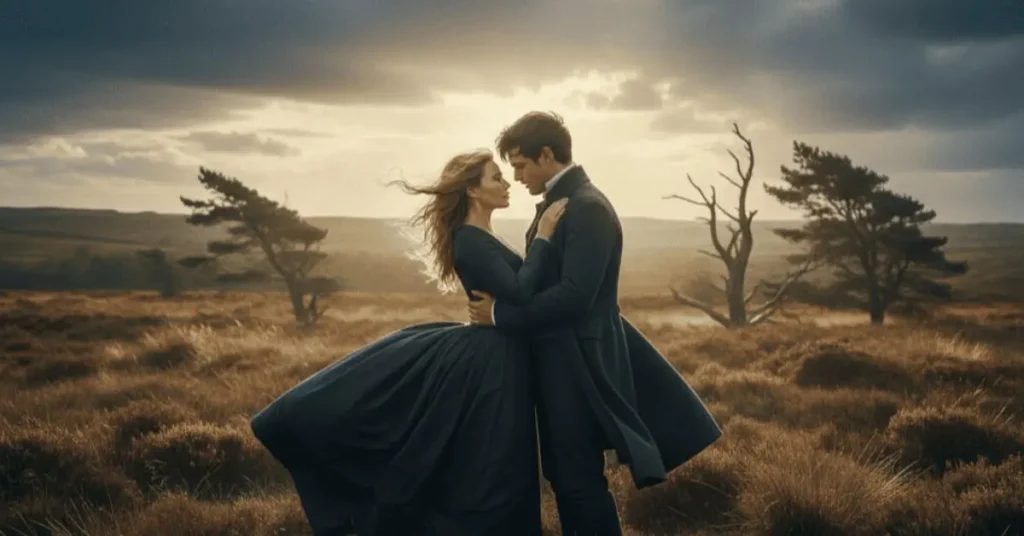
Table of Contents
Overview & Genre Classification
Wuthering Heights (2026) positions itself as a romantic drama with gothic undertones, though Fennell’s approach defies easy categorization. The film carries an R rating and runs 2 hours and 16 minutes, giving the director substantial canvas to explore the destructive passion between Catherine and Heathcliff across multiple time periods.
Rather than adhering strictly to the costume drama template, Fennell has created what she describes as an “emotional adaptation”—one that captures her visceral response to first reading Brontë’s novel rather than providing a faithful page-to-screen translation. The film stylistically bridges classical Hollywood romance aesthetics with modern filmmaking techniques, employing 35mm VistaVision cameras to achieve a visual grandeur that critics have compared to golden age epics.
The genre blend extends to the soundtrack, where traditional orchestral scoring by Anthony Willis collides with original electronic music from pop artist Charli XCX, creating what early viewers describe as an “intoxicating” sonic landscape that mirrors the film’s thematic collision between restraint and abandon.
Plot Summary & Narrative Structure
The Core Story
Set against the rugged backdrop of the Yorkshire moors, Wuthering Heights chronicles the all-consuming relationship between Catherine Earnshaw, daughter of a wealthy estate owner, and Heathcliff, the mysterious orphan brought into her family home. Their bond, forged in childhood, evolves into an obsessive love that society’s rigid class structures cannot contain.
When Catherine chooses to marry the genteel Edgar Linton instead of Heathcliff—prioritizing social advancement over personal desire—she sets in motion a cycle of revenge, manipulation, and emotional destruction that spans generations. Heathcliff disappears only to return years later, mysteriously wealthy and bent on possessing everything that was denied him, including Catherine herself, even as she remains married to another man.
Fennell’s Narrative Approach
While Brontë’s novel employs a complex framed narrative structure with multiple narrators, Fennell has streamlined the storytelling to focus primarily on the Catherine-Heathcliff dynamic. The director has indicated that her version emphasizes the primal, sexual nature of their connection—an element often subdued in previous adaptations.
The film deliberately abandons certain plot elements from the source material, with Fennell openly acknowledging this is not a comprehensive adaptation but rather her personal interpretation of the novel’s emotional core. This approach has generated both excitement and controversy among literary purists.
Cast & Performances
Margot Robbie as Catherine Earnshaw
Margot Robbie brings her considerable star power to the role of Catherine, a character defined by contradictions—passionate yet calculating, devoted yet destructive. At 35, Robbie is notably older than Brontë’s 18-year-old Catherine, a casting choice that initially sparked debate but which Fennell has defended as essential to capturing the character’s complexity.
Early reactions praise Robbie for delivering what Fennell calls one of the most devastating and beautiful performances of her career. Critics specifically highlight her chemistry with Elordi, with multiple reviews describing their on-screen dynamic as extraordinarily intense and believable.
Jacob Elordi as Heathcliff
Jacob Elordi’s casting as Heathcliff generated significant controversy, as Brontë’s text describes the character as dark-skinned and racially ambiguous. Fennell’s decision to cast a white Australian actor in the role sparked discussions about representation in period drama adaptations.
Despite the casting debate, Elordi’s performance has received strong early praise. Having previously worked with Fennell on Saltburn, the actor was offered the role directly without audition. Elordi has described the character as one of the most challenging and rewarding of his career, requiring him to embody both vulnerability and menacing obsession.
Supporting Cast Excellence
The supporting ensemble brings considerable talent to Brontë’s secondary characters. Hong Chau portrays Nelly Dean, the housekeeper who serves as witness to the unfolding tragedy. Shazad Latif takes on Edgar Linton, Catherine’s refined but ultimately inadequate husband. Alison Oliver, fresh from her breakthrough in Saltburn, plays Isabella Linton, who becomes entangled in Heathcliff’s vengeful schemes.
Martin Clunes appears as Mr. Earnshaw, while Ewan Mitchell rounds out the cast as Joseph, the cantankerous servant. The younger versions of Catherine, Heathcliff, and Nelly are portrayed by Charlotte Mellington, Owen Cooper, and Vy Nguyen in their film debuts.
Director & Production Insights
Emerald Fennell’s Vision
Emerald Fennell comes to Wuthering Heights as one of cinema’s most provocative voices. Her directorial debut Promising Young Woman (2020) earned her the Academy Award for Best Original Screenplay, making her the first British woman nominated for Best Director at the Oscars. Her follow-up, Saltburn (2023), further established her reputation for creating viscerally uncomfortable yet compulsively watchable cinema.
Fennell has described herself as obsessed with Brontë’s novel, stating she would have been furious if anyone else had directed this adaptation. Her approach prioritizes emotional authenticity over historical accuracy or literal fidelity to the source text. The director aims to recreate not the novel itself but rather the overwhelming feeling of reading it for the first time—what she describes as primal, sexual, and devastating.
Production Details & Filming Locations
Principal photography took place from late January to early April 2025 across multiple locations in the United Kingdom. The production utilized Sky Studios Elstree for controlled interior work while filming extensively on location in the Yorkshire Dales National Park—the actual setting of Brontë’s novel.
Specific filming locations included the remote valleys of Arkengarthdale and Swaledale, along with the village of Low Row. Fennell insisted on finding locations where no previous films had been shot, wanting audiences to experience these spaces fresh rather than recognizing them from other period dramas.
The production was financed by MRC and produced through Margot Robbie’s LuckyChap Entertainment alongside Fennell’s Lie Still production company. Warner Bros. Pictures secured distribution rights after a competitive bidding war, outbidding Netflix’s reported $150 million offer with a lower $80 million bid that guaranteed theatrical release and substantial marketing support.
Cinematography & Visual Design
Linus Sandgren’s Cinematic Mastery
Academy Award-winning cinematographer Linus Sandgren reunites with Fennell after their collaboration on Saltburn. Sandgren, known for his work on La La Land, First Man, and No Time to Die, brings extraordinary visual sophistication to Wuthering Heights.
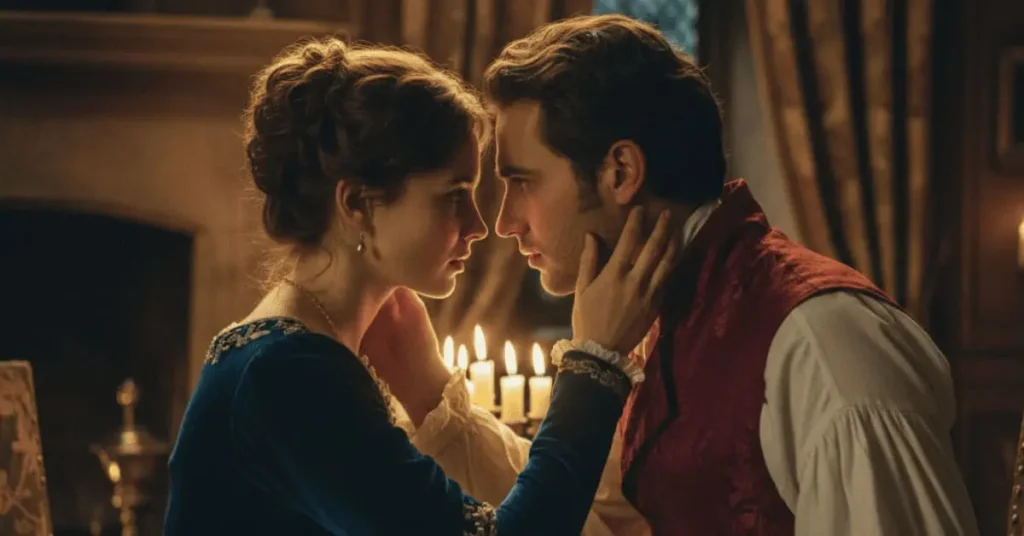
The film was shot entirely on 35mm VistaVision cameras, a format choice that delivers exceptional image quality and a distinctly cinematic texture. Early reactions consistently praise Sandgren’s work as spellbinding, with critics highlighting the way his camera captures both the sweeping grandeur of the Yorkshire landscape and the intimate intensity of the central relationship.
Sandgren’s approach balances classical composition with modern visual language, creating what viewers describe as simultaneously timeless and contemporary. The cinematography reportedly emphasizes natural light, dramatic weather conditions, and the stark beauty of the moorland setting.
Production Design & Costume
Production designer Suzie Davies, another Saltburn collaborator, creates environments that critics describe as sublime. Davies’ approach combines historical authenticity with heightened theatrical elements, building spaces that feel both grounded in period reality and emotionally amplified.
Costume designer Jacqueline Durran, the Oscar-winning talent behind Little Women and Anna Karenina, brings her exceptional eye to the film’s wardrobe. Early reactions specifically call out the costumes as exquisite and salivation-worthy, suggesting Durran has created designs that honor period accuracy while maximizing dramatic impact.
Music & Soundtrack
The Wuthering Heights soundtrack represents one of Fennell’s boldest creative choices. Composer Anthony Willis provides the orchestral score, building on his previous work with Fennell on both Promising Young Woman and Saltburn.
The unexpected element comes from pop artist Charli XCX, who contributed original music including tracks titled “House” and “Chains of Love.” This collision between traditional period drama scoring and contemporary electronic pop creates what critics describe as an intoxicating atmosphere that deepens the film’s emotional impact.
Fennell has explained this musical approach as essential to achieving her goal of making audiences feel the raw, overwhelming emotion she experienced reading Brontë’s novel. The juxtaposition of classical and modern musical languages mirrors the film’s broader aesthetic strategy of honoring literary heritage while asserting contemporary relevance.
Themes & Symbolic Analysis
Obsessive Love & Possession
At its core, Wuthering Heights examines love as a form of possession—not romantic idealization but consuming need. Fennell amplifies Brontë’s exploration of how desire can become destructive when unfulfilled, showing characters who cannot distinguish between love and ownership.
Catherine’s famous declaration from the novel about Heathcliff being essential to her existence takes on heightened physicality in Fennell’s interpretation. The film reportedly portrays their connection as fundamentally carnal and obsessive rather than spiritually transcendent.
Class, Power & Social Constraint
The rigid class structures of 19th-century England provide the external force that separates Catherine and Heathcliff, driving the tragedy. Fennell, herself from an upper-class background, brings sophisticated awareness to depicting how privilege operates and how social position determines available choices.
Heathcliff’s transformation from penniless orphan to wealthy gentleman allows the film to interrogate whether accumulated wealth can ever truly grant access to the class one aspires to join—a question that resonates beyond the period setting.
Revenge & Cyclical Violence
Heathcliff’s elaborate revenge scheme dominates the second half of Brontë’s novel, and Fennell’s adaptation reportedly maintains this thematic focus. The film explores how betrayal breeds vengeance, and how pain inflicted often returns to wound its originator.
Critical Reception & Early Reactions
The film premiered at the TCL Chinese Theatre in Los Angeles on January 28, 2026, with the official release following on February 13. Full critical reviews remain embargoed until closer to release, but early social media reactions from press screenings paint a picture of a deeply divisive yet undeniably impactful film.
Overwhelming Praise
Multiple critics have called Wuthering Heights a triumph. Variety’s assessment described it as a twisted and scorching tale, with Robbie and Elordi’s chemistry reaching extraordinary levels. The production values—particularly cinematography, costume design, and production design—have received universal acclaim, with some calling the film a strong awards contender in technical categories.
Entertainment industry observers predict significant box office success, with some forecasting it could establish Fennell as one of the most in-demand filmmakers of her generation. The film has been characterized as a crowd-pleaser despite its provocative content, suggesting broad commercial appeal beyond art house audiences.
Polarizing Elements
The film’s bold departures from conventional period drama have generated mixed responses. Some critics celebrate Fennell’s garish visuals and unrestrained direction, while others express concern that subtlety and nuance have been sacrificed for emotional maximalism.
Reactions acknowledge that viewers’ enjoyment will likely depend on their attachment to the source material and tolerance for Fennell’s distinctive aesthetic choices. Those seeking a faithful literary adaptation may find themselves disappointed, while audiences open to radical reinterpretation appear to be responding enthusiastically.
Box Office Projections & Commercial Prospects
Industry analysts predict Wuthering Heights could open to $50 million or more in its first weekend, capitalizing on the Valentine’s Day release date, star power of Robbie and Elordi, and Warner Bros.’ extensive marketing campaign.
The studio has positioned the film as both a romantic experience for couples and a standalone event for serious film enthusiasts. Theatrical exclusivity—a key demand from Fennell and Robbie during distribution negotiations—aims to drive audiences to cinemas rather than waiting for streaming availability.
Comparisons to other successful period romances and Fennell’s previous films suggest strong potential for sustained box office performance, particularly if word-of-mouth amplifies the conversation around the film’s provocative approach.
Awards Potential & Industry Recognition
Early speculation positions Wuthering Heights as a potential awards contender, particularly in technical categories. Sandgren’s cinematography, Durran’s costumes, Davies’ production design, and the film’s overall craft have all been identified as likely to attract recognition.
Whether the film’s bold stylistic choices and thematic intensity will appeal to mainstream awards bodies remains uncertain. Fennell’s previous work garnered Oscar nominations but also sparked debate about taste and appropriateness—a pattern that may repeat with this even more provocative project.
Comparison to Previous Adaptations
Emily Brontë’s novel has been adapted numerous times since the most famous 1939 version starring Laurence Olivier and Merle Oberon. Other notable adaptations include the 1970 film with Timothy Dalton, the 1992 version marking Ralph Fiennes’ film debut, Andrea Arnold’s 2011 interpretation, and an ITV miniseries with Tom Hardy.
Fennell’s version distinguishes itself through its unapologetically sexual approach and contemporary aesthetic sensibility. Where previous adaptations often emphasized restraint and period authenticity, this version reportedly prioritizes visceral emotional impact and visual boldness.
The decision to stylize the title with quotation marks—literally “‘Wuthering Heights'”—signals Fennell’s acknowledgment that this is an interpretation rather than definitive adaptation, freeing her to take liberties that more traditional approaches would avoid.
Expert Analysis: Fennell’s Auteur Vision
Examining Fennell’s complete filmography reveals consistent thematic preoccupations. Both Promising Young Woman and Saltburn explore obsession, power dynamics, revenge, and the way desire can become destructive. Wuthering Heights extends these concerns into period drama territory.
Fennell’s approach consistently involves taking familiar genres—the revenge thriller, the gothic country house mystery, the literary period adaptation—and subverting them through uncomfortable tonal shifts, provocative content, and refusal to provide moral clarity or emotional resolution audiences might expect.
Her interest in examining privilege from an insider perspective (Fennell herself comes from British high society) adds complexity to her depiction of class dynamics. She neither romanticizes nor simplistically condemns wealth and status, instead presenting them as forces that shape character and constrain possibility in nuanced ways.
Memorable Scenes & Cinematic Moments
While full plot details remain partially embargoed, early reactions highlight several striking sequences. The film reportedly opens with an unusual and provocative scene that immediately establishes Fennell’s willingness to shock audiences.
Critics have specifically mentioned the visual power of scenes set on the moors, where Sandgren’s cinematography captures the landscape’s stark beauty and emotional resonance. The physical intimacy between Robbie and Elordi has been described as intense and boundary-pushing for a period drama.
The climactic sequences reportedly deliver the emotional devastation Fennell aimed for, with some viewers describing themselves as overwhelmed by the film’s accumulating intensity.
Common Misinterpretations & Critical Debates
Misconception: This is a faithful literary adaptation. Fennell has explicitly stated this film captures her emotional response to reading Brontë rather than providing comprehensive narrative fidelity. Viewers expecting strict adherence to the novel’s plot, structure, or characterization should adjust their expectations accordingly.
The Casting Controversy: Heathcliff’s racial identity remains one of literary criticism’s enduring debates. Brontë’s text describes him ambiguously, leading to varied interpretations across adaptations. Fennell’s casting of Jacob Elordi prioritizes other aspects of the character while acknowledging this choice will disappoint some viewers hoping for more representative casting.
Age Appropriateness: Despite being based on a novel often taught in schools, this R-rated adaptation contains mature content unsuitable for younger audiences. The film’s sexual frankness and violent elements distinguish it sharply from more family-friendly period dramas.
Cultural Impact & Contemporary Relevance
Fennell’s Wuthering Heights arrives at a moment when audiences increasingly question the conventions of period drama. The success of shows like Bridgerton demonstrated appetite for historically-set romance that prioritizes entertainment and emotional engagement over documentary-style accuracy.
The film’s exploration of obsessive, destructive love resonates with contemporary conversations about toxic relationships and the romanticization of unhealthy dynamics. By refusing to sanitize Catherine and Heathcliff’s connection, Fennell forces audiences to confront the novel’s dark psychological truths.
The collaboration with Charli XCX connects the film to current pop culture in unexpected ways, potentially drawing younger audiences who might otherwise avoid period drama while sparking intergenerational conversations about classic literature’s ongoing relevance.
Behind-the-Scenes Insights
Robbie and Elordi developed what they describe as a codependent working relationship during filming, with both actors expressing how deeply they connected to the material and each other’s performances. This off-screen bond reportedly translated into the extraordinary on-screen chemistry critics have praised.
Fennell’s directorial approach on set emphasizes creating environments where actors feel safe to take risks and explore uncomfortable emotional territory. Her background as an actress herself reportedly helps her communicate effectively with performers and understand their creative process.
The decision to shoot on film rather than digital was deliberate, with Fennell and Sandgren believing the format’s texture and grain essential to achieving the film’s visual goals. The VistaVision format specifically provides exceptional image quality while maintaining the organic quality of celluloid photography.
Conclusion
Emerald Fennell’s Wuthering Heights represents one of 2026’s most ambitious and polarizing cinematic events. By transforming Emily Brontë’s literary classic into a visceral exploration of obsessive passion, Fennell has created a film that refuses easy categorization or comfortable viewing.
With extraordinary production values, powerhouse performances from Margot Robbie and Jacob Elordi, and Fennell’s uncompromising creative vision, the film delivers an experience that will likely be discussed and debated long after its theatrical run. Whether viewers embrace or reject Fennell’s approach, they cannot ignore the undeniable craft and artistic conviction on display.
As the film opens February 13 in theaters worldwide, audiences will finally determine whether Fennell has successfully captured the devastating emotional power of Brontë’s novel or whether her bold reinterpretation strays too far from the source material’s essence. Either way, Wuthering Heights stands as a significant entry in both period drama evolution and Fennell’s developing auteur filmography.
For those willing to embrace a Wuthering Heights that prioritizes raw emotion over restrained propriety, passionate intensity over tasteful subtlety, Fennell’s vision promises an unforgettable cinematic experience—one that may well establish itself as this generation’s defining interpretation of Brontë’s timeless tale of love, obsession, and revenge.